


VISITING CASA VICENS IN BARCELONA
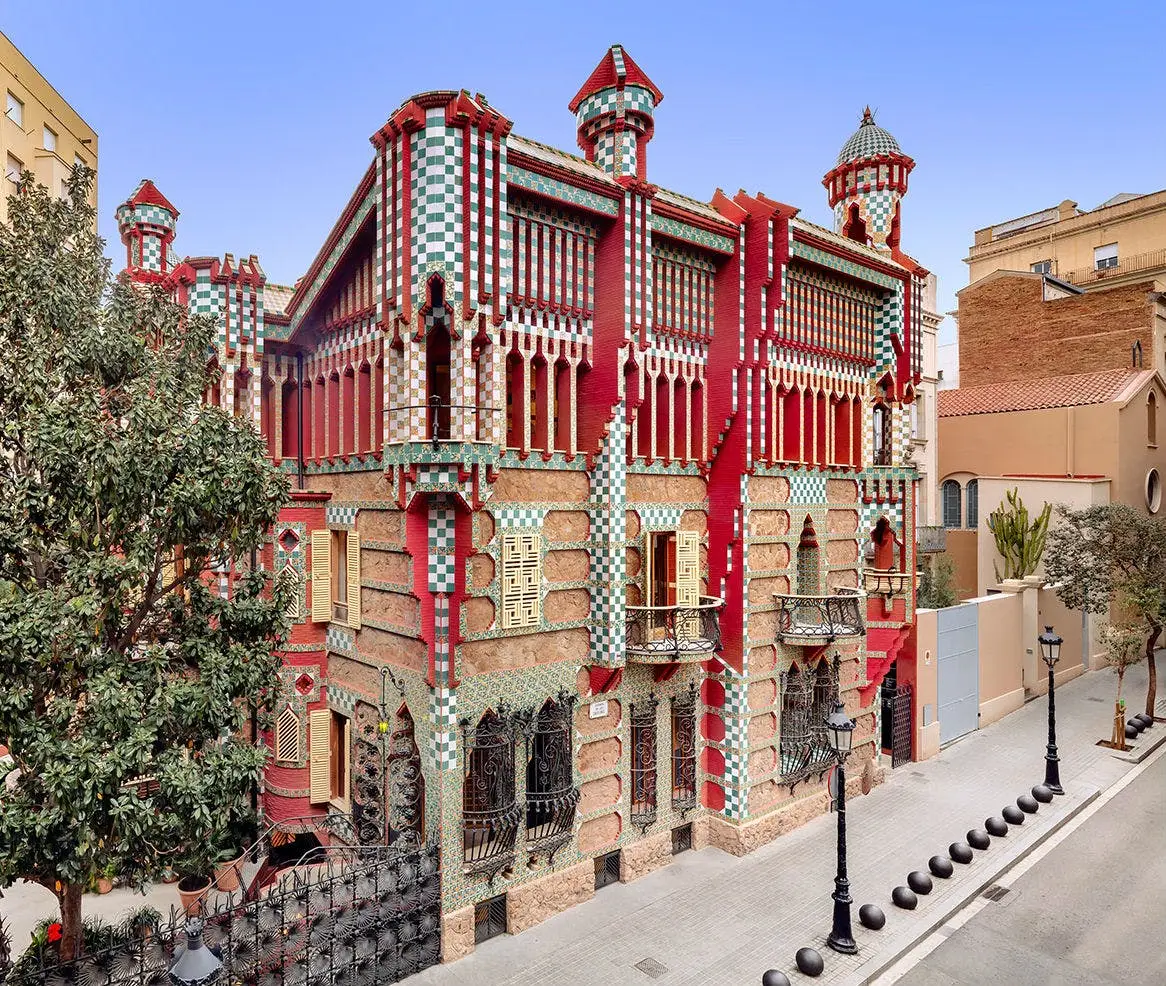
In Barcelona, Casa Vicens stands out in the Gràcia neighborhood. It is one of the earliest and most prestigious works created by the visionary artist Antoni Gaudí. Its construction dates back to 1883–1885: it is a private residence that marks the beginning of the wonderful career of the Catalan architect, already a symbol of his unique and evocative style. The house immediately impresses with its combination of colors, its decorative motifs inspired by nature, and its bold use of materials.
The façade is one of the most astonishing elements. The architect used a variety of materials such as glazed ceramic, stone, and wrought iron, creating a lively decorative effect. The tiles feature floral motifs, recalling carnations—the flowers that originally grew in the house’s garden—something that highlights the link between nature and architectural style. The colors, intense yet harmonious, alternate with balance, creating a vibrant surface that changes its appearance at different times of day. Geometric shapes blend with soft linear designs, giving breath to a contrast that makes the façade dynamic and full of movement. Near the building, you can notice the wrought-iron balconies, crafted with extreme care and distinguished by organic forms that resemble plants.
Every element seems designed not only for its practical function, but also for its aesthetic value. The windows, framed by refined decorations, allow light to enter naturally, creating plays of shadow and reflection inside. Even the entrance gate, made of dark iron and finely carved, anticipates the artistic richness found beyond the threshold, as if it were an invitation to step into an imaginary world. Inside, Casa Vicens is just as fascinating and surprising. Every room is designed with meticulous care, where colors, materials, and ornaments come together in a harmonious whole. The walls are adorned with nature-inspired motifs—leaves and flowers—but also with geometric forms that intertwine into decorative compositions. The ceilings are also rich in reliefs and paintings, adding depth and energy to the rooms. Natural light, filtering through the windows, highlights details and helps create a warm and welcoming atmosphere.
One of the most distinctive aspects of the interiors is the use of color. Gaudí is not afraid of strong tones: green, blue, ochre, and red alternate in a balanced way. Everything vibrates without ever becoming excessive. Each color seems chosen to evoke a specific feeling, supporting the emotion of those who move through the rooms. The furniture, much of it designed by Gaudí himself, also integrates perfectly with the space.
The garden, which originally surrounded the building, was an integral part of the project. Even though it is smaller today than its initial size, it still preserves the idea of an ongoing dialogue between inside and outside. Gaudí saw nature as an inexhaustible source of inspiration, and this is reflected in the decorations, materials, and layout of the spaces. The house is never isolated from the natural context, but seems to draw life from it—like a plant that grows spontaneously and harmoniously.
Casa Vicens is not just a building, but a true work of livable art. It represents the starting point of Gaudí’s architectural language, which would later develop into even bolder and more visionary forms. Here, however, you can already sense his ability to blend tradition and innovation, craftsmanship and modernity, functionality and artistic expression. Visiting Casa Vicens means entering a world where every detail has meaning, where every surface tells a story, and where architecture becomes a complete sensory experience. Hurry to discover this location full of endless surprises!
What to See in Barcelona: Casa Vicens
Don’t miss the chance to explore this marvel in the heart of the city. Behind its doors lies a world of history, art, and atmosphere that will surprise you at every step. Stroll through its fascinating spaces, admire the details that make it unique, and let yourself be captivated by stories that have shaped centuries of culture. Every corner offers something special, whether it’s breathtaking architecture, priceless works, or simply the charm of a place that belongs to the soul of the city. Visiting this attraction means creating memories that will stay with you forever. To make the most of your experience, book your ticket online now: you’ll guarantee your entry, avoid waiting in line, and enjoy your visit with absolute peace of mind.
Bundle Tickets
Useful info
Opening hours
Casa Vicens runs on a seasonal, timed-ticket schedule, with last entry typically 60 minutes before closing. Hours can shift for holidays or special events. Always recheck your exact date on the official calendar and arrive a little early for security and audio guide pickup.
Location
Find Casa Vicens at Carrer de les Carolines, 20–26, in Barcelona’s Gràcia district. The dragon-scale tiles and lush ironwork mark the facade. The entrance queue forms on the sidewalk; staff will guide you inside to scanners, headsets, and the start of the one-way visit route.
How to get there
Ride Metro L3 to Fontana or L7 (FGC) to Gràcia, then walk 5–8 minutes; buses and taxis stop nearby. If you drive, use a nearby car park and stroll. Barcelona’s center is walkable, and bike lanes make a quick approach—lock at street racks, then follow signs to the visitor entrance.
Best time to visit
Weekdays right after opening are calmest; late afternoon brings warm light on the rooftop and garden. Avoid mid-morning waves on weekends or school holidays. If rain is forecast, interiors shine; on blue-sky days the chimneys glow. Recheck your slot if a city event affects traffic.
Duration of the visit
Most visits take 60–90 unrushed minutes with the audio guide; design fans may linger two hours including the Gaudí interpretations and temporary exhibits. Add time for the shop and photos outside. Pair with nearby modernista sites in Gràcia to make it a relaxed half-day stroll.
Accessibility
Step-free entry, elevators, and adapted restrooms support most mobility needs; some rooftop areas have slopes or narrow passages. Staff can assist with lifts and quieter routes. Service animals are welcome. Borrow wheelchairs with ID and ask about sensory-friendly options.
Opening hours
Casa Vicens runs on a seasonal, timed-ticket schedule, with last entry typically 60 minutes before closing. Hours can shift for holidays or special events. Always recheck your exact date on the official calendar and arrive a little early for security and audio guide pickup.
Location
Find Casa Vicens at Carrer de les Carolines, 20–26, in Barcelona’s Gràcia district. The dragon-scale tiles and lush ironwork mark the facade. The entrance queue forms on the sidewalk; staff will guide you inside to scanners, headsets, and the start of the one-way visit route.
How to get there
Ride Metro L3 to Fontana or L7 (FGC) to Gràcia, then walk 5–8 minutes; buses and taxis stop nearby. If you drive, use a nearby car park and stroll. Barcelona’s center is walkable, and bike lanes make a quick approach—lock at street racks, then follow signs to the visitor entrance.
Best time to visit
Weekdays right after opening are calmest; late afternoon brings warm light on the rooftop and garden. Avoid mid-morning waves on weekends or school holidays. If rain is forecast, interiors shine; on blue-sky days the chimneys glow. Recheck your slot if a city event affects traffic.
Duration of the visit
Most visits take 60–90 unrushed minutes with the audio guide; design fans may linger two hours including the Gaudí interpretations and temporary exhibits. Add time for the shop and photos outside. Pair with nearby modernista sites in Gràcia to make it a relaxed half-day stroll.
Accessibility
Step-free entry, elevators, and adapted restrooms support most mobility needs; some rooftop areas have slopes or narrow passages. Staff can assist with lifts and quieter routes. Service animals are welcome. Borrow wheelchairs with ID and ask about sensory-friendly options.
Map of Casa Vicens
